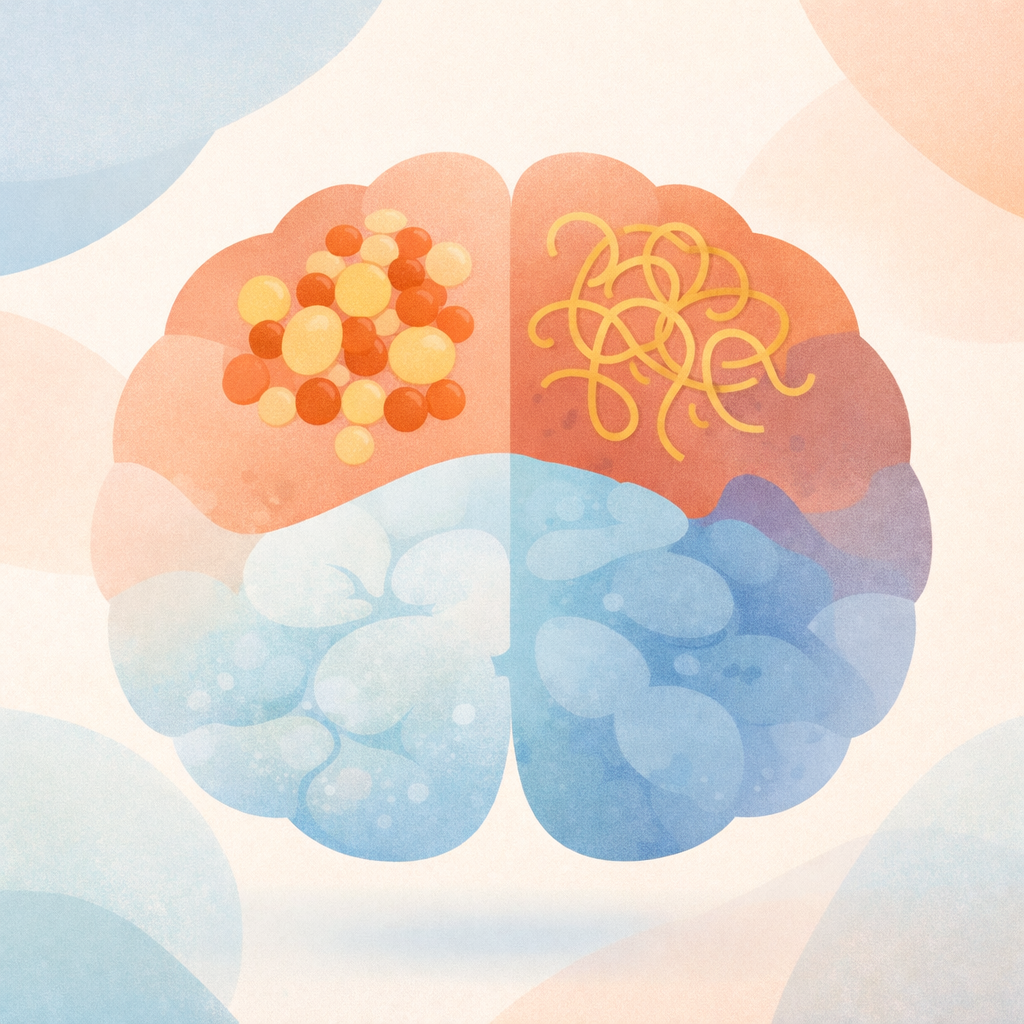
Alzheimer's disease is not simply about memory loss. It is a progressive brain disease that gradually damages the networks that allow us to think, remember, speak, and function independently. Today, doctors understand Alzheimer's as a biological process that starts many years before symptoms appear, following a predictable pattern in the brain.
This current understanding clarifies why some individuals may feel fine despite the disease being present, why others develop symptoms rapidly, and why new treatments are now possible.
How Alzheimer's Starts
Within the brain, two abnormal proteins accumulate:
- Amyloid forms sticky clumps between brain cells.
- Tau forms tangles inside brain cells.
These proteins disrupt brain cell communication and health. Over time, the cells become damaged and die. As this happens, the brain's communication networks - especially those for memory, language, and problem-solving - begin to deteriorate.
This process typically begins 10-20 years before symptoms appear.
Why Memory Is Affected First
Memory relies on a delicate network deep within the brain called the hippocampus. This area is particularly vulnerable to tau. When tau spreads there, the brain loses its ability to form and retrieve new memories. This is why Alzheimer's often starts with forgetting conversations, repeating questions, or losing track of recent events.
As tau spreads to other networks, individuals may also experience:
- Word-finding difficulty
- Trouble navigating or driving
- Problems organizing, multitasking, or managing finances
- Changes in mood, sleep, or behavior
How Doctors Now Define Alzheimer's
Instead of relying solely on symptoms, doctors now use a biological system called A-T-N to describe what is happening inside the brain.
- A = Amyloid
- T = Tau
- N = Neurodegeneration (brain cell injury or loss)
Each of these can be measured using blood tests, spinal fluid tests, and brain scans.
This allows doctors to determine:
- Whether Alzheimer's biology is present
- How active the disease is
- Whether the brain is being damaged
A person with A+ T+ N+ has full biological Alzheimer's disease, even if symptoms are still mild.
Why Some People Decline Faster Than Others
Amyloid sets the stage, but tau is what causes damage. Neurodegeneration shows how much injury has already occurred.
Two people can have similar memory problems but very different disease biology. One may have Alzheimer's, while another may have strokes, Parkinson's disease, or another brain disorder. This is why modern testing is so crucial.
Who Is at Risk
Age is the biggest risk factor, especially after 65. Women are affected more often than men. Certain genes - especially APOE-e4 - increase risk. Heart health, sleep, exercise, education, and inflammation all influence how the disease develops.
Most people do not inherit Alzheimer's directly, but many inherit a vulnerability to it.
How Alzheimer's Is Diagnosed Today
Doctors now combine:
- Cognitive testing
- Blood biomarkers
- Brain scans or spinal fluid testing
Blood tests are often used to screen. If they suggest Alzheimer's, more precise tests confirm whether amyloid and tau are present.
This means Alzheimer's can now be identified earlier and more accurately than ever before.
How It Is Treated
Some medications help support brain signaling and reduce symptoms. These do not cure the disease but can improve quality of life.
Newer infusion treatments remove amyloid from the brain. These treatments slow the disease when started early, before too much damage has occurred.
Healthy lifestyle choices - physical activity, good sleep, heart health, mental engagement, and social connection - also protect brain networks and slow progression.
What This Means for Patients and Families
Alzheimer's is not a sudden event. It is a biological journey that unfolds over years. Today, doctors can detect this journey earlier, explain it more clearly, and offer treatments that were not possible before.
With modern testing and care, people now have more time, more options, and more control than ever before.
Understanding Alzheimer's as a disease of amyloid, tau, and brain network loss provides patients and families with clarity and a path forward.