What It Is, What the Experience Is Like, and Why It May Matter for You
When someone experiences symptoms such as tremor, stiffness, balance issues, cognitive changes, vivid dreams, dizziness upon standing, or other neurological changes, a key question is why these symptoms are occurring. For some individuals, these symptoms are related to conditions called synucleinopathies, which include Parkinson's disease, dementia with Lewy bodies, multiple system atrophy, and similar disorders.
The skin alpha-synuclein test is a recent diagnostic method designed to help healthcare providers identify biological evidence of these conditions in a minimally invasive and accessible manner.
This article outlines what the test involves, what you can expect, and how the results are used, helping you decide if it's suitable for you.
What Is the Skin Alpha-Synuclein Test?
The skin alpha-synuclein test detects abnormal forms of a protein called alpha-synuclein within small nerve fibers in the skin.
Alpha-synuclein is a protein typically found in nerve cells. In specific neurological conditions, this protein can become misshapen, abnormal, and start accumulating in nerves. These abnormal forms are closely associated with diseases like Parkinson's disease and dementia with Lewy bodies.
Importantly, these changes can occur not only in the brain but also in the small nerves that reach into the skin, allowing for the detection of disease indicators without invasive brain procedures.
Why Can a Skin Test Tell Us Something About the Brain?
While symptoms often originate in the brain, synuclein-related diseases impact the entire nervous system, including nerves responsible for blood pressure, sweating, digestion, and sensation.
The nerves in the skin are part of this system. When abnormal alpha-synuclein appears in these skin nerves, it can reflect broader nervous system changes.
This makes the skin a kind of window into nerve health, enabling doctors to detect disease-related changes in a safer and simpler way.
What Does the Test Actually Look For?
The test does not detect symptoms.
It does not measure dopamine levels.
It does not predict exactly how fast conditions will change.
Instead, it identifies pathologic (abnormal) alpha-synuclein in skin nerves. Finding this abnormal protein indicates a synuclein-related neurological condition.
The test helps answer questions such as:
- Is there biological evidence of a synucleinopathy?
- Does this support or challenge a suspected diagnosis?
- Should we reconsider prognosis, treatment, or monitoring?
What Is the Experience Like?
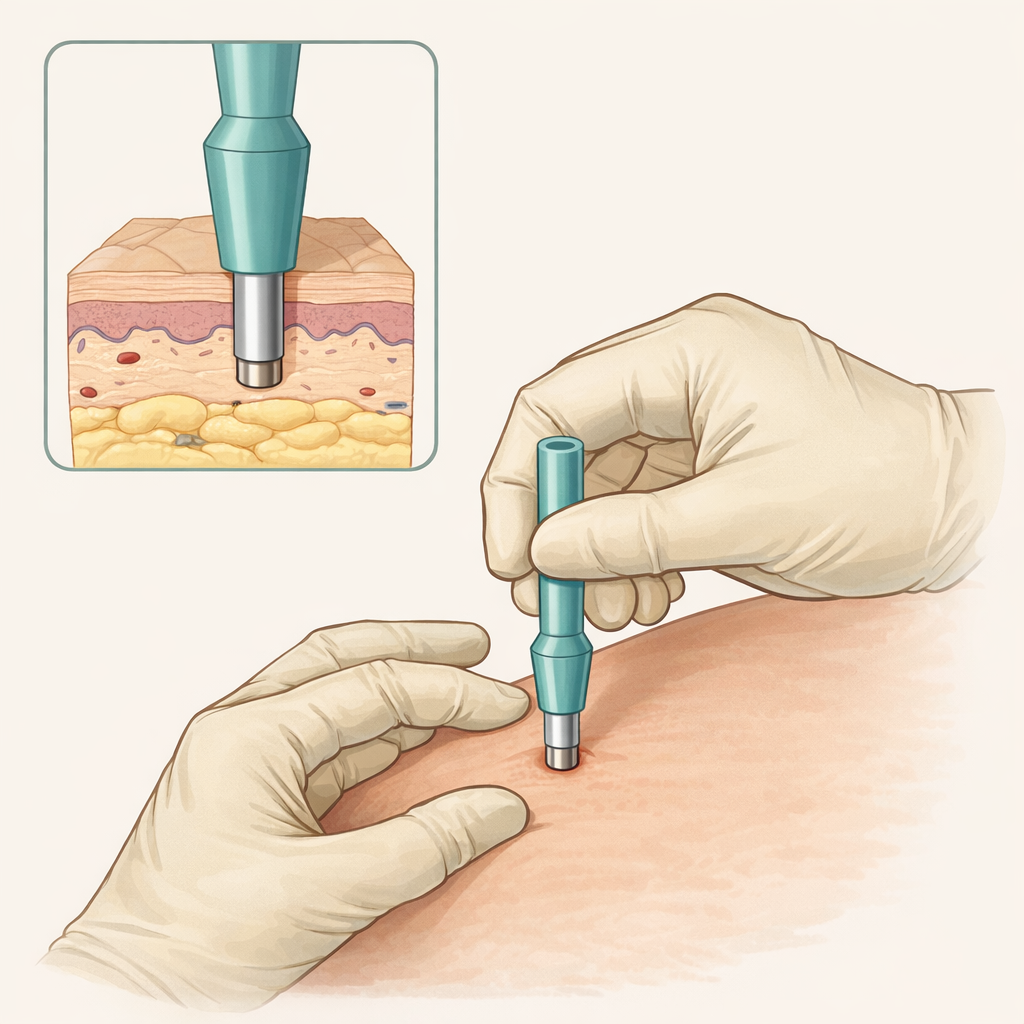
During the Procedure
- The test is performed in a clinic or office setting.
- You remain fully awake during the procedure.
- A small amount of numbing medication (local anesthetic) is applied.
- Three very small skin samples are taken from specific body areas.
- Each sample is about the size of a pencil eraser.
- The procedure typically takes 20-30 minutes.
Most people describe the sensation as pressure or brief discomfort, rather than pain.
After the Procedure
- Bandages are applied to each site.
- Stitches are usually not required.
- You can typically drive yourself home.
- Healing generally occurs over 1-2 weeks.
- Small scars may remain but are usually minimal.
Your care team will provide clear instructions on wound care and what to monitor.
Is the Test Safe?
Yes. Skin biopsy procedures have been safely used in neurology for many years.
Potential risks are minor and include:
- Mild soreness
- Minor bleeding
- Rare infection
- Small scars
Serious complications are very uncommon.
How Long Does It Take to Get Results?
Results are typically available within 2-3 weeks. Your neurologist will review the findings with you and explain their significance in the context of your symptoms and other tests.
You may also see images showing where abnormal protein was (or was not) found.
What Do the Results Mean?
If the Test Is Positive
A positive result indicates that abnormal alpha-synuclein was found in skin nerves, supporting the presence of a synuclein-related neurological condition.
It does not:
- Identify exactly which disease you have
- Predict how quickly symptoms will progress
- Indicate that conditions will worsen rapidly
It does help link your diagnosis to biological factors rather than just symptoms.
If the Test Is Negative
A negative result means abnormal alpha-synuclein was not detected in the sampled skin nerves.
This does not automatically rule out a neurological condition. In early or brain-limited disease, abnormal protein may not be present in the skin yet.
Your doctor will interpret a negative result carefully in conjunction with your clinical picture.
How Is This Test Used in Care?
The skin alpha-synuclein test is not mandatory, and it is never used in isolation. It is one tool among many.
Doctors may use it to:
- Enhance diagnostic confidence
- Clarify unclear or overlapping symptoms
- Differentiate between similar conditions
- Support shared decision-making
- Guide monitoring and future planning
Sometimes, the most valuable result is not a simple yes or no, but how the result fits into the broader context of your health.
Will This Change My Treatment?
It may - but not always.
The test can influence:
- Medication decisions
- Monitoring strategies
- Eligibility for research studies
- Counseling about future planning
Lifestyle, brain health strategies, and symptom management remain important regardless of the result.
Is the Test Covered by Insurance?
Coverage varies by plan. Many patients are covered by Medicare or other insurers, and support teams can often help clarify coverage before testing.
If cost is a concern, your care team can discuss options with you.
Do I Have to Do This Test?
No. This test is optional.
Some individuals prefer to gather as much biological information as possible. Others focus on symptoms and treatment without additional testing. Both approaches are valid.
The right choice aligns with your values, goals, and readiness for information.
The Most Important Question
How will this help me live better now?
For some, the answer is clarity.
For others, it's reassurance.
For some, it's planning.
For others, it's simply understanding what is happening in their body.
The skin alpha-synuclein test is not about labeling - it is about understanding, helping you make decisions with greater confidence and less uncertainty.
Your neurologist will help you determine whether this test fits into your care journey and what to do with the information if you choose to proceed.