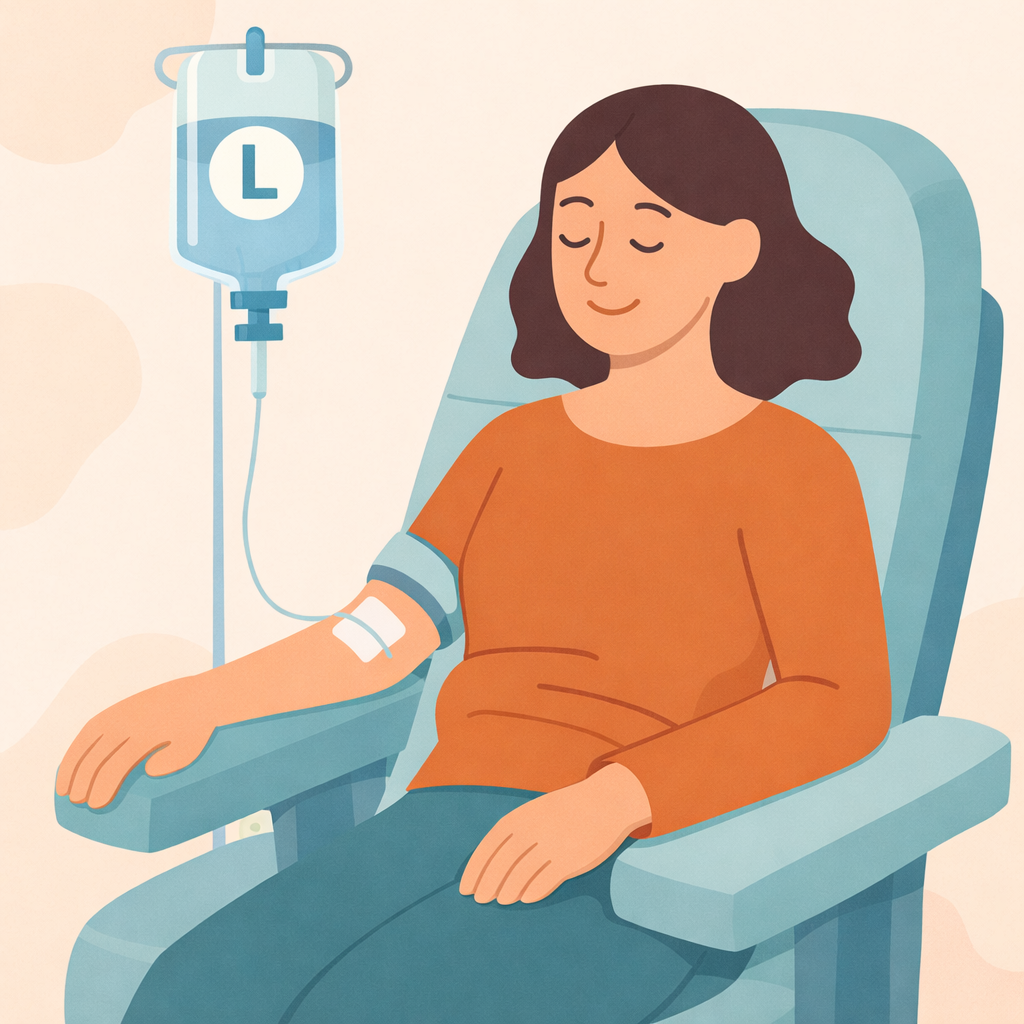
Understanding what this treatment can - and cannot - do, how risks are managed, and how decisions evolve over time.
Introduction: Why this conversation matters now
For many years, Alzheimer’s disease care focused on coping rather than altering the disease itself. Families were offered medications that could temporarily help symptoms such as memory or attention, but nothing that changed the underlying biology driving decline. Lecanemab represents a meaningful shift. It is the first widely available treatment shown to slow the progression of early Alzheimer’s disease by targeting one of the core disease proteins.
At the same time, lecanemab is not simple. It requires careful testing, repeated monitoring, and a shared understanding of risk, benefit, and uncertainty. This article is designed to help patients and caregivers understand what lecanemab really offers, how to think about safety, and how decisions about treatment are made and revisited over time.
What lecanemab is - and what it is not
Lecanemab is a monoclonal antibody, a laboratory-designed immune protein that recognizes and binds to amyloid-beta, a protein that accumulates abnormally in the brains of people with Alzheimer’s disease. Specifically, lecanemab targets soluble amyloid protofibrils, which are believed to be especially harmful to brain cells and brain networks.
It is important to be clear about what this means in practical terms.
Lecanemab is not a cure. It does not remove Alzheimer’s disease from the brain entirely, and it does not reverse damage that has already occurred. It also does not usually lead to noticeable improvement in memory or thinking.
What it does do is slow the rate at which the disease progresses, particularly when started early—during mild cognitive impairment (MCI) or very mild dementia due to Alzheimer’s disease.
Why "early" matters so much
Alzheimer’s disease begins silently. Abnormal amyloid builds up in the brain 10-20 years before symptoms appear. By the time memory problems are noticeable, some degree of irreversible brain injury has already occurred.
Lecanemab works best when:
- Symptoms are still mild
- Daily independence is largely preserved
- Brain networks have not yet sustained widespread damage
This is why the treatment is approved only for early Alzheimer’s disease and why timing plays such a critical role in deciding whether it makes sense.
What benefit looks like in real life
One of the hardest parts of deciding about lecanemab is understanding benefit in human terms.
In clinical trials, people receiving lecanemab declined more slowly than those receiving placebo. On standardized cognitive and functional scales, this translated into roughly 25-30% slowing of decline over 18 months.
For patients and caregivers, that often means:
- Staying independent a little longer
- Delaying the need for help with finances, medications, or complex tasks
- Preserving quality time at an earlier stage of illness
What it usually does not mean is feeling “better” day to day. Most people do not notice improvement. Instead, benefit shows up only when looking back over months or years and realizing that change has been slower than expected.
Why tracking over time matters more than snapshots
Because lecanemab reshapes the trajectory of decline rather than creating improvement, short-term testing can be misleading. A single cognitive test may look unchanged—or even slightly worse—despite meaningful long-term benefit.
Clinicians therefore focus on:
- Using the same cognitive and functional measures over time
- Comparing change over 6-12 months rather than weeks
- Incorporating caregiver observations and daily function, not just test scores
This long-view approach is essential for judging whether the treatment is helping you, not just whether it worked in a study.
Understanding the main risk: ARIA
The most important safety issue with lecanemab is something called amyloid-related imaging abnormalities, or ARIA. ARIA refers to changes seen on brain MRI scans that occur when amyloid is cleared from the brain, particularly from blood vessel walls.
There are two main forms:
- ARIA-E: temporary brain swelling or fluid shifts
- ARIA-H: small brain bleeds or iron deposits from prior bleeding
Most ARIA cases:
- Cause no symptoms
- Are detected only because MRI scans are performed
- Resolve on their own with monitoring or temporary treatment pauses
However, in rare cases, ARIA can be symptomatic or serious, which is why monitoring is so central to safe treatment.
Why monitoring increased in 2025
By 2025, enough real-world experience had accumulated that regulators recognized ARIA can sometimes occur very early in treatment. After reviewing rare but serious early cases, the U.S. Food and Drug Administration updated safety requirements to mandate earlier MRI monitoring.
This change was designed to catch ARIA before symptoms appear, allowing clinicians to pause treatment and prevent complications.
What MRI monitoring looks like now
Most patients can expect:
- A baseline MRI before starting
- An MRI before the 3rd infusion
- Additional MRIs during early treatment
- MRI at any time if symptoms raise concern
This may sound intensive, but it reflects a safety-first approach that has significantly reduced serious complications in real-world practice.
Who is at higher risk for ARIA
Not everyone has the same risk. Several factors increase the likelihood of ARIA.
Genetics (APOE ε4)
People who carry the APOE ε4 gene—especially those with two copies—have a higher chance of developing ARIA. Genetic testing is therefore recommended before treatment, not to exclude people automatically, but to allow informed discussion and closer monitoring when needed.
Blood thinners
People who require long-term anticoagulant medications have a higher risk of serious brain bleeding. Many programs avoid lecanemab in these situations or proceed only with extreme caution.
Pre-existing brain findings
Baseline MRI scans help identify people with a high burden of microbleeds or other vascular changes that could raise risk.
What happens if ARIA is found
Finding ARIA does not automatically mean treatment must stop forever.
Management usually depends on:
- Whether symptoms are present
- How severe the MRI changes are
Options may include:
- Continuing treatment with close monitoring
- Temporarily holding doses
- Restarting after ARIA resolves
- Discontinuing if ARIA recurs or becomes severe
Most ARIA resolves completely, and many people resume treatment safely after a pause.
What treatment is like day to day
Starting treatment
Lecanemab is typically started as an intravenous infusion given every two weeks. Infusions themselves are usually well tolerated, though mild infusion reactions can occur early on.
Long-term treatment
In 2025, a subcutaneous (under-the-skin) form became available for maintenance therapy in some patients. This can reduce reliance on infusion centers and make long-term treatment more manageable.
Regardless of the form, treatment involves:
- Regular appointments
- Ongoing safety monitoring
- Periodic reassessment of goals and benefit
How long people stay on treatment
There is no fixed duration. Some people remain on lecanemab for years, while others stop earlier.
Reasons to reconsider treatment may include:
- Progression to later-stage dementia
- Recurrent or severe ARIA
- Medical changes that increase risk
- Treatment burden outweighing perceived benefit
- Personal or caregiver preference
Importantly, decisions are not one-time decisions. They are revisited as the disease and life circumstances evolve.
What happens if you choose not to start
Choosing not to start lecanemab is also a valid decision. Reasons people decline include:
- Preference to avoid medicalization
- Concern about MRI monitoring or risks
- Limited perceived benefit
- Other health priorities
Declining treatment does not mean abandoning care. Focus remains on:
- Brain health optimization
- Safety and function
- Symptom management
- Planning and support
In many cases, people revisit the decision later as new information or circumstances arise.
The emotional side of the decision
For patients and caregivers, the decision about lecanemab is rarely just medical. It is emotional, practical, and deeply personal.
Common feelings include:
- Hope mixed with fear
- Relief at having an option, even a limited one
- Anxiety about risk
- Uncertainty about the future
Good care teams recognize this and create space for ongoing conversation, not pressure.
What “success” really means
Success with lecanemab does not look the same for everyone.
For few, success is:
- Major slowing of disease progression
- Stabilizing Alzheimer disease related pathology (Amyloid and Tau levels)
For some, success is:
- Delaying loss of independence
- Staying engaged in meaningful activities longer
For others, success may simply be:
- Knowing they explored all reasonable options
- Making an informed choice aligned with personal values
The most important outcome is not a number on a test, but whether the treatment aligns with what matters most to you and your family.
Looking ahead
Lecanemab is likely just the beginning. Future therapies may:
- Target tau protein
- Combine multiple disease pathways
- Personalize treatment further
As the field evolves, the role of lecanemab may shift - but its introduction has already changed how Alzheimer’s disease is understood and treated.
Final thoughts
Lecanemab offers something that did not exist before: the ability to slow Alzheimer’s disease by directly targeting its biology. The benefit is real but modest. The risks are real but manageable when care is structured and monitoring is rigorous.
The right decision is not the same for everyone. What matters most is clarity, honesty, and partnership—with decisions revisited as life unfolds.
If you are considering lecanemab, the most important next step is not saying yes or no, but having a thoughtful conversation with your care team about what slowing decline would mean for your life, right now.